Skip to content
Bira Shipyard
Yard desk · established coast, written method

Bira Shipyard — timber-hull work on the Tanjung Bira foreshore

Haul-out and slipway slots, refit and restoration scopes, hull repair and caulking, condition surveys and supervised new-build project management — run as one programme rather than five separate conversations on the beach.

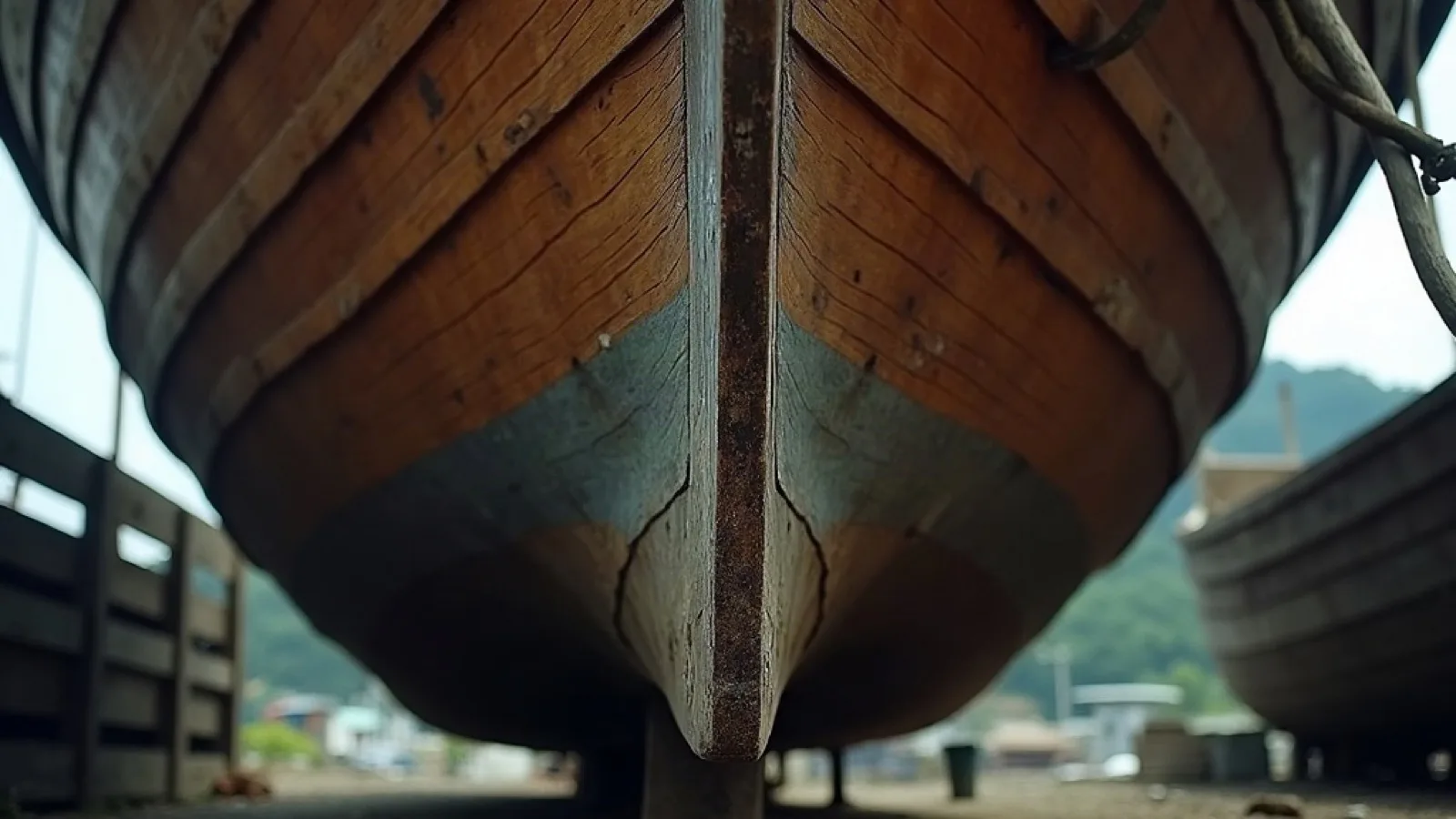
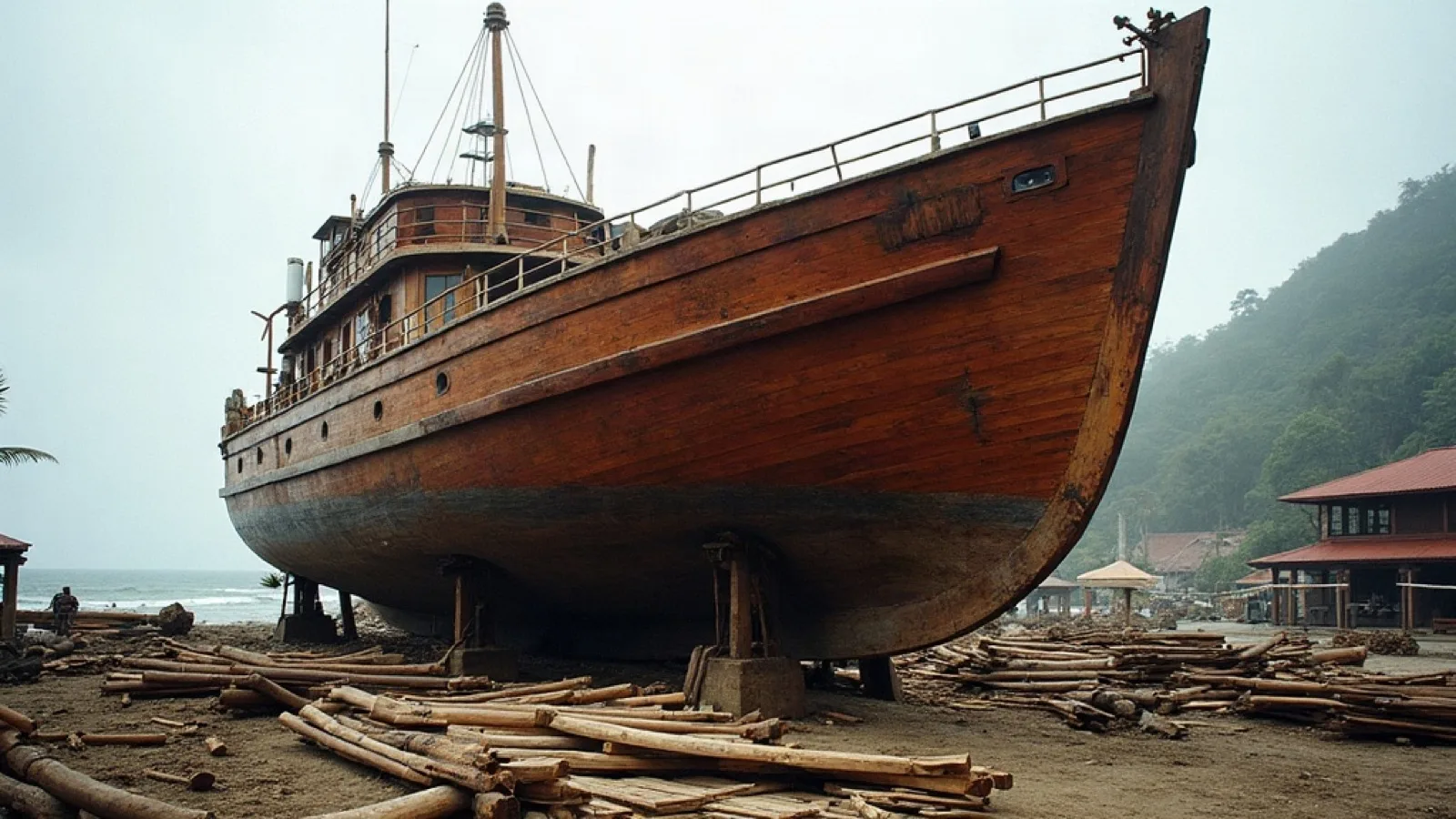
Traditional Indonesian timber hull shored on wooden ways on the white-sand foreshore at Tanjung Bira, South Sulawesi
Yard job sheet
Coast
Bira & Tanjung Bira foreshore, Bulukumba Regency
Hull types
Timber-first, mixed material
Quotations
USD, issued after a written scope and a hull inspection
Contracts
PT Komodo Galangan Nusantara
Road access
From Makassar, typically a five to six hour transfer

A hull drawn up on ways and shored on the open foreshore — the working condition every Bira scope is written against.

What the desk covers

Six scopes, one programme

Each of these can be bought on its own. Most vessels arriving at Bira need two or three of them sequenced against a single tide and season window.

01

Haul-Out & Slipway

Tide-window planning, ground assessment, ways and cradle preparation, blocking, shoring and the relaunch sequence.

Read the scope
02

Refit & Restoration

Scoped refits on older timber vessels: structure first, then systems, joinery and finish, with change-order discipline and photo reporting.

Read the scope
03

Hull Repair & Caulking

Plank replacement, frame sistering, fastening renewal, seam caulking and the sheathing decisions that follow.

Read the scope
04

New-Build Supervision

Owner-side supervision on a hull under construction: milestone definition, timber acceptance, photo evidence and payment gates.

Read the scope
05

Survey & Condition Reports

Pre-purchase and pre-refit inspection coordination: sounding, fastening sampling, structural assessment and a written record.

Read the scope
06

Yard Project Management

One programme across trades: sequencing, labour, materials, change control, reporting and handover records.

Read the scope
Why a yard desk at all

Most overruns here are scope drift, not craftsmanship

Foreshore yards run on relationships, verbal agreement and long habit. That is a strength when the work is routine and a liability when it is not. Cost overruns on a timber hull in this region are rarely caused by poor workmanship — the shipwright tradition on this coast is genuinely deep. They are caused by scope drift: a hull is opened, more rot is found than expected, and nobody agreed in advance who decides what happens next or what it costs.

The desk removes that ambiguity. Before the vessel comes up the beach there is a written scope, a stated inspection method, a defined change-order route, and a payment schedule tied to milestones rather than to the calendar. When the survey finds more than expected — and on an older hull it usually does — there is a mechanism instead of an argument.

Craftsmanship and project management are different products. You can have excellent workmanship and a badly run project. Judge the two separately, and buy both deliberately.
Shipwright's hands pressing caulking cotton into an open carvel plank seam with a caulking iron and mallet
Seam work is a living trade on this coast — the craft is rarely the problem.
Sequence

Two fixed tide events, and everything else planned between them

The haul and the relaunch are calendar events, not preferences. A missed window is a wait rather than an inconvenience, so the sequence below is worked backwards from the tide.

  1. Step 1

    Enquiry and hull data

    Length, beam, draught, displacement, build year, timber species where known, last haul-out date, and photographs of the garboard, stem, transom and any known soft areas.

  2. Step 2

    Scope and slot

    A written scope of work against a tide and season window. Slipway capacity on this coast is finite; the slot is booked against the scope, not the other way round.

  3. Step 3

    Haul-out and opening

    The hull comes up, is blocked and shored, and the real condition is recorded before any quotation is finalised.

  4. Step 4

    Survey-led revision

    Findings are written up with photographs. Anything outside the original scope becomes a priced change order the owner approves before work proceeds.

  5. Step 5

    Execution and reporting

    Work runs to the programme with dated photo reporting, so an owner who is not on the beach still knows what state the hull is in.

  6. Step 6

    Relaunch and handover

    Take-up period, seam check, systems commissioning, and a written record of what was replaced, what was repaired, and what was left for the next haul-out.

Timber blocking and angled shoring supporting a wooden hull on a wet sand foreshore as the tide returns
Blocking and shoring drawn from survey, not from habit — and a relaunch planned around the take-up period.
Method

Eight rules applied to every category of work

R1
Write the scope before the hull moves
Line items, assumptions stated, exclusions stated.
R2
Fix the two tide events
Haul and relaunch, then fit the work between them.
R3
Plan the support against structure
Blocking and shoring drawn from survey, not from habit.
R4
Open, record, then price
Firm numbers follow evidence rather than preceding it.
R5
Structure before systems, systems before finish
Nothing closed up before what is behind it is signed off.
R6
Control variations in writing
Description, photograph, price, approval — small items batched weekly.
R7
Report weekly with dated evidence
So an owner elsewhere is not relying on recollection.
R8
Hand over a written record
Replaced, repaired, deferred, plus recommendations for next time.

They are deliberately unglamorous. Applied consistently they are the difference between a six-week job and a five-month one.

Read the full yard record and handover standard
Categories of work

What a Bira scope usually turns out to be

Short maintenance haul

Typical content

Wash, inspect, anodes, skin fittings, antifoul, relaunch.

Governing constraint

Tide window; largely season-independent.

Inspection haul

Typical content

Open in agreed areas, sound, probe, sample fastenings, record, relaunch without repair.

Governing constraint

Access agreed in advance; produces the scope for later work.

Structural repair

Typical content

Plank renewal, frame sistering, floors, fastening renewal by zone, seam work.

Governing constraint

Dry season; timber lead time; hull support planning.

Full refit

Typical content

Structure, then systems, then joinery and finish, in that order.

Governing constraint

Sequence discipline; change control; usually a full dry window.

Supervised new build

Typical content

Specification, material acceptance, milestone inspection, evidence, payment gates.

Governing constraint

Owner decision speed; timber procurement; documented hidden structure.

Pre-purchase support

Typical content

Haul and preparation for inspection, yard-side condition record.

Governing constraint

Seller cooperation; independence where independence is required.

Client work stays confidential unless an owner agrees otherwise, so this is a description of work types and their governing constraints rather than a list of vessel names.

Honest fit

What belongs on this coast — and what does not

A desk that accepts every enquiry regardless of fit is optimising for its own utilisation rather than for the vessel. If a job belongs somewhere else, you will be told that rather than quoted for it.

Strong fit Bring it here
  • Timber structure. Planking, frames, floors, deck beams, stem and transom work, fastening renewal.
  • Seams and caulking. A specialist trade practised as a living craft rather than an occasional revival.
  • Supervised new build. Traditional construction with owner-side specification, inspection and payment gates layered over it.
  • Joinery and fit-out. Timber interior work to a high standard, at lead times difficult to match elsewhere.
Poor fit Place it elsewhere
  • Heavy steel or aluminium fabrication. Requires plant, certified welding facilities and materials supply oriented to metal.
  • Major machinery overhaul. Needs a clean workshop, measuring equipment and manufacturer support.
  • High-specification paint systems. Needs controlled environment and humidity management an open beach cannot provide.
  • Complex composite work. Materials, cure conditions and specialist labour are oriented elsewhere.

Where a programme spans several regions — a hull started here and fitted out elsewhere, or a boat that cruises Komodo and returns for winter work — the desk coordinates against the wider national shipyard directory rather than pretending every job belongs in Bira.

Yard enquiries

Send vessel data first and the conversation gets useful immediately

The desk cannot say anything meaningful about a haul-out, a refit or a build without dimensions, displacement and photographs — and it would rather say so than produce a number that has to be withdrawn later.

Haul-out or slipway slot
LOA, beam, loaded and light draught, displacement, keel profile, underbody photographs, intended dates.
Refit or restoration
Build year, construction, last survey, known defects, how the vessel is used, what you want it to do next.
Hull repair
Photographs of the affected areas, what changed and when, whether the vessel is currently afloat.
Survey coordination
Whether it is pre-purchase or pre-refit, vessel location, and whether haul-out access has been agreed.
Supervised new build
Concept, intended operating profile, target dimensions, timeline and budget range.
Common questions

Frequently asked questions

What does Bira Shipyard do?
Bira Shipyard is a yard-side coordination desk on the Tanjung Bira foreshore in Bulukumba Regency, South Sulawesi. It plans and supervises timber-hull work: haul-out and slipway slots, refit and restoration scopes, hull repair and caulking, condition surveys, and supervised new-build project management. Construction, repair, refit and vessel-sale contracts are issued by PT Komodo Galangan Nusantara.
Where is the Bira boat yard located?
Bira and Tanjung Bira sit at the south-eastern tip of the South Sulawesi peninsula, in Bulukumba Regency, roughly a five to six hour road transfer from Makassar. The working beaches and hardstanding sit directly on the foreshore, which is why hulls are drawn up on the sand rather than into a basin.
Can you haul out a vessel that was not built in Bira?
Yes. The foreshore yards regularly take timber hulls built elsewhere in the archipelago, and steel or GRP vessels within the limits of the ground and the ways. The controlling factors are draught, displacement, keel form and tide window, not where the vessel originated.
How are quotations issued?
In USD, after a written scope of work and an inspection of the hull. Bira Shipyard does not publish blanket price lists, because timber-hull work is priced from what the survey finds once the sheathing, paint and ceiling are opened up.

Bira Shipyard is a yard-side desk. It does not sell vessels, act as a central agency or market charters, and it does not publish price lists for work that has not been surveyed.